
Contents
- 1 Intro to Realm of Origin FAQ
- 1.1 What is Realm of Origin?
- 1.2 What type of stories can I read on Realm of Origin?
- 1.3 Is Realm of Origin a cultivation fantasy world?
- 1.4 How does Realm of Origin connect to the RMG Nexus Universe?
- 1.5 Who are the main characters in Realm of Origin?
- 1.6 What makes Realm of Origin different from other cultivation stories?
- 1.7 Can new readers start without knowing xianxia?
- 1.8 Does Realm of Origin include guilds, spiritual roots, and awakening ceremonies?
- 1.9 Is Realm of Origin inspired by Chinese cultivation novels?
- 1.10 Where can I start reading Realm of Origin stories?
- 1.11 What is cultivation in Realm of Origin?
- 1.12 What cultivation methods exist in Realm of Origin?
- 1.13 What are the qi cultivation stages in Realm of Origin?
- 1.14 What are spiritual roots in Realm of Origin?
- 1.15 What is the Awakening Ceremony in Realm of Origin?
- 1.16 What are the risks of awakening in Realm of Origin?
- 1.17 What is dual cultivation in Realm of Origin?
- 1.18 What are the benefits and risks of dual cultivation in Realm of Origin?
- 1.19 What types of guilds exist in Realm of Origin?
- 1.20 What is alchemy in Realm of Origin?
- 2 Cultivation (General)
- 3 Qi Cultivation (Stages • Realms • Techniques)
- 3.1 How does qi work in Realm of Origin?
- 3.2 What cultivation realms exist beyond basic stages?
- 3.3 What is a qi cultivation manual?
- 3.4 What ancient qi techniques survive in Realm of Origin?
- 3.5 What are martial arts cultivation techniques?
- 3.6 What is qi cultivation for beginners?
- 3.7 What are the official qi stages from novice to master?
- 4 Spiritual Roots
- 5 Spiritual Awakening
- 6 Dual Cultivation
- 7 Guilds (General & Types)
- 7.1 What is a guild in Realm of Origin?
- 7.2 Why were guilds established in Yuanjing?
- 7.3 Why are guilds important today?
- 7.4 What types of guilds exist in Realm of Origin?
- 7.5 How do I join the Adventurer Guild?
- 7.6 What jobs does the Adventurer Guild offer?
- 7.7 What does the Merchant Guild do?
- 7.8 What is the Craft Guild?
- 7.9 What does the Healer Guild handle?
- 7.10 What is the Engineer Guild’s role?
- 7.11 What does the Inscription Guild do?
- 8 Enchantments & Glyphs
- 8.1 What are the types of enchantments in Realm of Origin?
- 8.2 What is a legendary enchantment?
- 8.3 What is an artifact enchantment?
- 8.4 What is enchanted wood?
- 8.5 What are elder runes?
- 8.6 What are magic scrolls in Realm of Origin?
- 8.7 What are glyphs in Realm of Origin?
- 8.8 What are dragon glyphs?
- 8.9 What are shadow glyphs?
- 8.10 What are healing and protection glyphs?
- 9 Alchemy
- 9.1 How did alchemy develop in Yuanjing?
- 9.2 What are the schools of alchemy in Realm of Origin?
- 9.3 What are examples of alchemy products?
- 9.4 What are the laws and limits of alchemy in Realm of Origin?
- 9.5 What is spiritual alchemy?
- 9.6 What is soul alchemy?
- 9.7 What is tech alchemy?
- 9.8 What is aether alchemy?
- 9.9 What are the core secrets of alchemy in Realm of Origin?
Intro to Realm of Origin FAQ
What is Realm of Origin?
Realm of Origin is a cultivation-fantasy world set on Yuanjing, where spiritual energy shapes society, destiny, and power. Qi is treated as a fundamental force of nature that doesn’t just fuel techniques—it shapes social hierarchy and individual fate across Yuanjing. The cultivation process is governed by clear natural laws and costs, so every gain feels earned and every victory feels meaningful.
It forms the cultivation foundation of the RMG Nexus Universe, with nations, guilds, sects, spiritual roots, and awakening rituals—and the mysterious arrival of sentient devices that challenge old beliefs. ROO’s lore sets clear natural laws (costs, limits, risks) so victories feel earned and systems stay consistent across stories.
What type of stories can I read on Realm of Origin?
Stories follow cultivators who awaken roots, train, join guilds or sects, and rise—or fall—through trials.
Expect sect rivalries, guildA guild is a mortal-run organization focused on a specific trade, craft, or field of service. Unlike sects, guilds are not ruled by cultivation power but by skill, experience, and reputation. Each guild follows a standardized rank system, provides unique privileges to its members, and operates independently across cities and nations. In the Realm of Origin, major guilds include the... More politics, artifact hunts, alchemy gambits, and expeditions into ancient ruins. Arcs range from street-level survival to city-shaping conflicts; a strong entry is The Last Man on the Wall, which blends personal stakes with world threats.
Is Realm of Origin a cultivation fantasy world?
Yes—qi, spiritual roots, techniques, and realms of power govern society and fate. Beyond genre staples, ROO introduces Yuanjing-specific systems such as spiritual root compatibility, a comprehensive guildA guild is a mortal-run organization focused on a specific trade, craft, or field of service. Unlike sects, guilds are not ruled by cultivation power but by skill, experience, and reputation. Each guild follows a standardized rank system, provides unique privileges to its members, and operates independently across cities and nations. In the Realm of Origin, major guilds include the... More licensing framework, legally regulated clinics, and a vast civic rune grid that powers entire cities.
ROO honors xianxia inspirations while introducing Yuanjing-specific mechanics (root compatibility, guildA guild is a mortal-run organization focused on a specific trade, craft, or field of service. Unlike sects, guilds are not ruled by cultivation power but by skill, experience, and reputation. Each guild follows a standardized rank system, provides unique privileges to its members, and operates independently across cities and nations. In the Realm of Origin, major guilds include the... More licensing, legal clinics, civic rune grids). See the Realm of Origin glossary for shared terms and how they differ from genre defaults.
How does Realm of Origin connect to the RMG Nexus Universe?
Realm of Origin supplies the Nexus with cultivation lore, metaphysics, and terminology. It acts as the source of truth for cultivation-based elements used across the RMG Nexus Universe, ensuring consistency of rules and terminology.
Cross-universe elements appear as lore-consistent “bridges”—for example, the arrival of mysterious devices is treated as an in-world phenomenon with regulations and consequences. ROO remains fully readable on its own while enriching Nexus stories.
Who are the main characters in Realm of Origin?
Multiple protagonists—cultivators, guildA guild is a mortal-run organization focused on a specific trade, craft, or field of service. Unlike sects, guilds are not ruled by cultivation power but by skill, experience, and reputation. Each guild follows a standardized rank system, provides unique privileges to its members, and operates independently across cities and nations. In the Realm of Origin, major guilds include the... More adepts, alchemists, scribes, and wanderers—whose paths intersect across Yuanjing.
Viewpoints rotate through sect halls, guildA guild is a mortal-run organization focused on a specific trade, craft, or field of service. Unlike sects, guilds are not ruled by cultivation power but by skill, experience, and reputation. Each guild follows a standardized rank system, provides unique privileges to its members, and operates independently across cities and nations. In the Realm of Origin, major guilds include the... More cities, frontier wilds, and forbidden ruins (see The Whispering Rune). The cast reflects ROO’s social ladder: apprentices, journeymen, masters, and officials with competing agendas.
What makes Realm of Origin different from other cultivation stories?
ROO balances duels and breakthroughs with robust guild society, clear natural laws, and civic stakes. Economics, permits, wages, and public safety rules matter; injuries carry real costs, and reckless power is constrained by regulation and infrastructure.
Economies matter (permits, reagents, wages), injuries carry costs, and public safety rules constrain reckless power. The appearance of mysterious devices adds a controlled tech-mystic twist without breaking cultivation logic.
Can new readers start without knowing xianxia?
Yes—terms are explained in-story, so no prior knowledge is required.
Guided arcs and the Realm of Origin glossary ease readers into roots, stages, and guildA guild is a mortal-run organization focused on a specific trade, craft, or field of service. Unlike sects, guilds are not ruled by cultivation power but by skill, experience, and reputation. Each guild follows a standardized rank system, provides unique privileges to its members, and operates independently across cities and nations. In the Realm of Origin, major guilds include the... More ranks. Short onramps introduce one system at a time before combining them in later arcs.
Does Realm of Origin include guilds, spiritual roots, and awakening ceremonies?
Yes—guilds structure mortal society, spiritual roots define potential, and the Awakening Ceremony reveals paths.
GuildA guild is a mortal-run organization focused on a specific trade, craft, or field of service. Unlike sects, guilds are not ruled by cultivation power but by skill, experience, and reputation. Each guild follows a standardized rank system, provides unique privileges to its members, and operates independently across cities and nations. In the Realm of Origin, major guilds include the... More tracks emphasize safety and utility; sect paths chase peak potential. These institutions recruit differently, pay differently, and sometimes clash over talent and territory.
Is Realm of Origin inspired by Chinese cultivation novels?
Yes, while building original systems and world history unique to Yuanjing.
ROO keeps progression, trials, and legacies but grounds them in exams, licenses, and urban infrastructure, making power feel integrated with daily life instead of isolated to mountaintop duels.
Where can I start reading Realm of Origin stories?
Begin at the Realm of Origin hub and the “Begin Here” storyline.
From there, branch into guildA guild is a mortal-run organization focused on a specific trade, craft, or field of service. Unlike sects, guilds are not ruled by cultivation power but by skill, experience, and reputation. Each guild follows a standardized rank system, provides unique privileges to its members, and operates independently across cities and nations. In the Realm of Origin, major guilds include the... More arcs, alchemy threads, exploration sagas, or sect dramas such as The Solitary Ascent. Each arc flags its required lore so you can jump in confidently.
What is cultivation in Realm of Origin?
Cultivation is the refinement of body, mind, and spirit to harmonize with qi and transcend mortal limits.
Paths include qi cycling, body tempering, intent training, inscription, and alchemy. Methods carry tradeoffs—fast gains risk instability; slow gains build resilient foundations.
What cultivation methods exist in Realm of Origin?
Qi cultivation, body refinement, mind/intent training, inscription, alchemy, and hybrid guildA guild is a mortal-run organization focused on a specific trade, craft, or field of service. Unlike sects, guilds are not ruled by cultivation power but by skill, experience, and reputation. Each guild follows a standardized rank system, provides unique privileges to its members, and operates independently across cities and nations. In the Realm of Origin, major guilds include the... More arts.
Sects pursue extremes and rare breakthroughs; guilds prioritize safe, repeatable methods that serve cities and trade (see guild system). Hybrids combine small gains across paths for durable progress.
What are the qi cultivation stages in Realm of Origin?
Common ladder: Initiate → Foundation → Condensation → Core → Spirit, then rarer Immortal paths.
Names vary by school, but thresholds align for exams, pay grades, and permits—details on qi cultivation stages. Higher tiers demand cleaner qi, better tools, and mentor oversight.
What are spiritual roots in Realm of Origin?
Spiritual roots are innate affinities that shape cultivation speed, stability, and ceiling.
Roots influence technique compatibility, career tracks, and artifact safety—see “spiritual roots” in the glossary. Rare roots create opportunities but often require custom methods and safeguards.
What is the Awakening Ceremony in Realm of Origin?
A licensed ritual that reveals a person’s spiritual roots and baseline affinity.
Results guide school placement, guildA guild is a mortal-run organization focused on a specific trade, craft, or field of service. Unlike sects, guilds are not ruled by cultivation power but by skill, experience, and reputation. Each guild follows a standardized rank system, provides unique privileges to its members, and operates independently across cities and nations. In the Realm of Origin, major guilds include the... More offers, and sect recruitment; learn more in the spiritual awakening test article. Stabilization protocols prevent long-term flaws after revelation.
What are the risks of awakening in Realm of Origin?
Improper rituals can cause qi burns, misalignment, or shock.
Legal clinics keep rates low; unlicensed ceremonies and tainted reagents are the main dangers—see awakening stages and safety. Recovery plans include rest cycles, antidotes, and supervised retraining.
What is dual cultivation in Realm of Origin?
A bonded practice where two compatible partners cycle qi together for mutual growth. Within city jurisdictions this practice is tightly regulated: consent, contracts, medical screenings, and session monitoring are mandatory to ensure safety and responsibility.
In cities it’s regulated—consent, contracts, and medical screenings are mandatory. Clinics test compatibility, establish safe ranges, and monitor sessions to prevent backlash. This regulation ensures the practice is treated as a serious and responsible path.
What are the benefits and risks of dual cultivation in Realm of Origin?
Benefits: faster recovery, smoother breakthroughs, shared resistances. Risks: backlash, dependency, emotional strain. Shortcuts and mismatched flows can injure both partners; mentors often require written milestones, exit clauses, and risk caps.
Proper instruction and clear goals reduce failures; shortcuts injure both partners. Many pairs set written milestones with mentors to avoid mismatched expectations.
What types of guilds exist in Realm of Origin?
Craft, Merchant, Healer, Adventurer, Engineer, Inscription, and Alchemy Guilds.
Each runs ranks, exams, and specialty licenses under city charters—overview in the fantasy guild system. Cities negotiate quotas and privileges in exchange for public works and safety.
What is alchemy in Realm of Origin?
Alchemy refines qi and reagents into pills, tonics, inks, and catalysts for medicine, industry, and war.
GuildA guild is a mortal-run organization focused on a specific trade, craft, or field of service. Unlike sects, guilds are not ruled by cultivation power but by skill, experience, and reputation. Each guild follows a standardized rank system, provides unique privileges to its members, and operates independently across cities and nations. In the Realm of Origin, major guilds include the... More standards balance purity, safety, and power—read more at the Alchemy Guild. Misuse leads to fines, license loss, or criminal charges if harm occurs.
Cultivation (General)
What are everyday examples of cultivation in Yuanjing?
Wardens wear low-tier glyphs, farmers treat soil with qi tonics, and couriers use breath cycles for endurance.
Most citizens practice modest, reliable techniques—small boosts that add up over a lifetime—while professionals layer specialized methods for their trade.
What are body cultivation techniques?
Methods that temper flesh, bone, and marrow for resilience, speed, and force.
They demand resources and pain tolerance but excel in survivability and melee dominance—see body cultivation. Bracing tonics and recovery glyphs reduce downtime between tempers.
What are mind/intent cultivation techniques?
Training of focus, perception, and will to command qi precisely and resist spiritual pressure.
They amplify all other paths but punish impatience. Mind drills include visualization, rhythm cycles, and distraction wards for high-stress work.
How do guildA guild is a mortal-run organization focused on a specific trade, craft, or field of service. Unlike sects, guilds are not ruled by cultivation power but by skill, experience, and reputation. Each guild follows a standardized rank system, provides unique privileges to its members, and operates independently across cities and nations. In the Realm of Origin, major guilds include the... More methods differ from sect methods?
GuildA guild is a mortal-run organization focused on a specific trade, craft, or field of service. Unlike sects, guilds are not ruled by cultivation power but by skill, experience, and reputation. Each guild follows a standardized rank system, provides unique privileges to its members, and operates independently across cities and nations. In the Realm of Origin, major guilds include the... More methods trade peak potential for safety, stability, and economic utility.
Sects chase extremes and secrecy, accepting higher risk for higher ceilings—compare tracks in the guild system guide. Many citizens start in guilds and later transfer to sects with exemptions.
Qi Cultivation (Stages • Realms • Techniques)
How does qi work in Realm of Origin?
Qi is Yuanjing’s responsive energy—drawn, cycled, and imprinted by will under natural laws and costs.
Flow depends on roots, environment, method quality, and mental stability; misuse harms body and spirit (see qi cultivation basics). Weather, geography, and city rune grids all modulate ambient qi.
What cultivation realms exist beyond basic stages?
Above Spirit, paths diverge into Domain, Avatar, and Immortal ladders—rare and perilous. Reaching these tiers demands perfected roots, vast resources, and profound insight; failure can cripple or even corrupt a cultivator’s soul.
They require perfected roots, vast resources, and profound insights; failure cripples or corrupts. Most citizens never attempt them; stories that do treat the costs seriously.
What is a qi cultivation manual?
A written method with cycles, risks, and remedies designed for safe replication.
GuildA guild is a mortal-run organization focused on a specific trade, craft, or field of service. Unlike sects, guilds are not ruled by cultivation power but by skill, experience, and reputation. Each guild follows a standardized rank system, provides unique privileges to its members, and operates independently across cities and nations. In the Realm of Origin, major guilds include the... More manuals include dosages and legal limits; sect versions guard advanced breakthroughs—examples appear in The Solitary Ascent. Manuals list red-flag symptoms and emergency purges.
What ancient qi techniques survive in Realm of Origin?
Fragments like marrow tempers, void-breath cycles, and rune-breath hybrids persist.
Modern practice adds safeguards to prevent brittle failures; see related lore in Void Root Abilities. Museums and private vaults sometimes house lost manuscripts.
What are martial arts cultivation techniques?
Systems that fuse body training with qi bursts, footwork arrays, and weapon intents.
Curricula scale from street defense to elite dueling, with safety caps in cities and looser rules on frontier charters.
What is qi cultivation for beginners?
Breath timing, posture, meridian mapping, and impurity purge under supervision.
Early weeks emphasize safety: daylight cycles, clean water, steady meals, and rest—starter ladder at qi cultivation stages. Beginners track journals to spot overtraining.
What are the official qi stages from novice to master?
Apprentice → Journeyman → Adept → Master → Grandmaster (cross-guild equivalents).
These map to recognized thresholds for exams and pay—see stages overview. Some careers cap earlier by choice for stable, high-demand roles.
Spiritual Roots
What are examples of spiritual roots?
The recognized spiritual roots in Yuanjing are:
- Fire: power through destruction, passion, and direct force
- Water: mastery of healing, adaptation, and smooth progression
- Earth: stability, durability, and long-term strength
- Wind: speed, motion, and elusive tactics
- Void: evolutionary potential—grows uniquely with the cultivator
- Primordial: pure balance, linked to the Origin Flame itself
- Light & Shadow: a rare dual root tied to karma, fate, and consequence
Each root shapes cultivation speed, stability, and potential. Rare roots such as Void, Primordial, or Light & Shadow demand custom techniques and extra safeguards. See the Realm of Origin glossary for extended definitions.
What does a “spiritual root system” mean?
The rules that govern root testing, classification, compatibility, and legal protections.
Shared charts prevent mismatching students with dangerous methods; related reading: awakening test. Laws also protect weak-root citizens from predatory recruiters.
What do roots symbolize in cultivation?
Affinity and temperament—how one harmonizes with Yuanjing’s forces.
They guide choices but don’t decide destiny; discipline, mentors, and resources still shape outcomes.
Is there a guide to cultivating by root type?
Yes—guild primers list safe cycles and crafts per root profile.
Sects publish stricter versions with steeper gains and risks; for stage matching see qi stages. Apprentices often trial multiple low-risk methods before specialization.
Spiritual Awakening
What is the Awakening Ceremony process?
Preparation → Resonance → Revelation → Stabilization under licensed examiners.
Stabilization is crucial—training early causes long-term flaws; full flow in the spiritual awakening stages guide. Family sponsors and guildA guild is a mortal-run organization focused on a specific trade, craft, or field of service. Unlike sects, guilds are not ruled by cultivation power but by skill, experience, and reputation. Each guild follows a standardized rank system, provides unique privileges to its members, and operates independently across cities and nations. In the Realm of Origin, major guilds include the... More scholarships cover many fees.
What signs appear during or after awakening?
Harmless signs include lights, scents, temperature shifts, or brief visions aligned to root type.
Severe pain, numbness, or lingering dizziness indicate misalignment—see symptoms. Clinics teach calming breaths and grounding to prevent panic spirals.
What is the usual age for awakening?
Most citizens awaken between 12–16; late and adult awakenings occur.
Some delay for health, work, or scholarships; averages and exceptions are discussed in the awakening guide. Adults often receive remedial classes to close skill gaps.
Can someone with weak roots still cultivate?
Yes—guild methods and tools let weak-root citizens progress safely and earn well.
They excel in crafts, medicine, logistics, and ward work; guild careers provide stable advancement without dueling risks.
Dual Cultivation
What is dual cultivation in Realm of Origin?
A bonded practice where two compatible partners cycle qi together for mutual growth. Within city jurisdictions this practice is tightly regulated: consent, contracts, medical screenings, and session monitoring are mandatory to ensure safety and responsibility.
In cities it’s regulated—consent, contracts, and medical screenings are mandatory. Clinics test compatibility, establish safe ranges, and monitor sessions to prevent backlash. This regulation ensures the practice is treated as a serious and responsible path.
What are the benefits and risks of dual cultivation in Realm of Origin?
Benefits: faster recovery, smoother breakthroughs, shared resistances. Risks: backlash, dependency, emotional strain. Shortcuts and mismatched flows can injure both partners; mentors often require written milestones, exit clauses, and risk caps.
Proper instruction and clear goals reduce failures; shortcuts injure both partners. Many pairs set written milestones with mentors to avoid mismatched expectations.
What makes a good dual cultivation partner?
Root compatibility, trust, shared goals, and a vetted method.
GuildA guild is a mortal-run organization focused on a specific trade, craft, or field of service. Unlike sects, guilds are not ruled by cultivation power but by skill, experience, and reputation. Each guild follows a standardized rank system, provides unique privileges to its members, and operates independently across cities and nations. In the Realm of Origin, major guilds include the... More clinics test pairings and set safeguards before contracts (inscription checks are common—see Inscription Guild). Many pairs schedule cool-down periods to prevent codependency.
Are there martial or immortal dual methods?
Yes—martial pairs share timing/force; immortal paths require perfected roots and rare contracts.
Both demand discipline; shortcuts cause dependency or injury. Mentors insist on written exit clauses and risk caps.
How is dual cultivation portrayed in Realm of Origin stories?
As a high-stakes choice that can fuel rapid rise or tragic collapse.
Narratives test trust, ambition, and the cost of shared power (e.g., moments in the Last Man on the Wall arc). Good intentions can still go wrong under pressure.
Guilds (General & Types)
What is a guildA guild is a mortal-run organization focused on a specific trade, craft, or field of service. Unlike sects, guilds are not ruled by cultivation power but by skill, experience, and reputation. Each guild follows a standardized rank system, provides unique privileges to its members, and operates independently across cities and nations. In the Realm of Origin, major guilds include the... More in Realm of Origin?
A chartered organization that trains specialists, sets standards, and pays for useful arts.
Guilds stabilize cities, offer apprenticeships, and provide safe methods for the root-poor—overview: guild system. In return, cities grant privileges and limited political seats.
Why were guilds established in Yuanjing?
To protect workers, regulate dangerous arts, and coordinate civic projects.
Early guildA guild is a mortal-run organization focused on a specific trade, craft, or field of service. Unlike sects, guilds are not ruled by cultivation power but by skill, experience, and reputation. Each guild follows a standardized rank system, provides unique privileges to its members, and operates independently across cities and nations. In the Realm of Origin, major guilds include the... More charters arose after public disasters; standardized training reduced accidents and black-market harm.
Why are guilds important today?
They maintain wards, clinics, roads, markets, foundries, and rune grids.
Guilds also run exams, arbitration, and recalls on faulty goods, keeping cities functional and safe.
What types of guilds exist in Realm of Origin?
Craft, Merchant, Healer, Adventurer, Engineer, Inscription, and Alchemy.
Each has ranks, exams, and specialty licenses enforced by city charters:
Craft,
Merchant,
Healer,
Adventurer,
Engineer,
Inscription,
Alchemy.
How do I join the Adventurer GuildA guild is a mortal-run organization focused on a specific trade, craft, or field of service. Unlike sects, guilds are not ruled by cultivation power but by skill, experience, and reputation. Each guild follows a standardized rank system, provides unique privileges to its members, and operates independently across cities and nations. In the Realm of Origin, major guilds include the... More?
Pass entry exams (fitness, field sense, ethics), register a license, accept novice contracts.
Higher ranks unlock expeditions, bounties, and frontier charters—see Adventurer Guild. Fail three contracts, and retraining or demotion may apply.
What jobs does the Adventurer GuildA guild is a mortal-run organization focused on a specific trade, craft, or field of service. Unlike sects, guilds are not ruled by cultivation power but by skill, experience, and reputation. Each guild follows a standardized rank system, provides unique privileges to its members, and operates independently across cities and nations. In the Realm of Origin, major guilds include the... More offer?
Escort, beast control, rescue, ruin scouting, ward repair, and mapping.
Pay scales with risk, completion rate, and verified rank; postings list gear requirements and hazard notes (guild page).
What does the Merchant GuildA guild is a mortal-run organization focused on a specific trade, craft, or field of service. Unlike sects, guilds are not ruled by cultivation power but by skill, experience, and reputation. Each guild follows a standardized rank system, provides unique privileges to its members, and operates independently across cities and nations. In the Realm of Origin, major guilds include the... More do?
Secures trade routes, standardizes weights and seals, and underwrites caravans and markets.
Licensed merchants access credit networks, bonded guards, and restricted auctions—see Merchant Guild.
What is the Craft GuildThe Craftsman Guild oversees the forging of weapons, armor, tools, and alchemical equipment. Known for their rune-integrated crafting, they support adventurers, alchemists, and engineers across all nations. More?
Trains smiths, carpenters, masons, jewelers, and artificers to strict codes.
Masters can imprint low-tier runes and certify apprentices—details at Craft Guild. Tool inspections and material audits are routine.
What does the Healer GuildA guild is a mortal-run organization focused on a specific trade, craft, or field of service. Unlike sects, guilds are not ruled by cultivation power but by skill, experience, and reputation. Each guild follows a standardized rank system, provides unique privileges to its members, and operates independently across cities and nations. In the Realm of Origin, major guilds include the... More handle?
Clinics, emergency wards, antidotes, and post-awakening care under strict ethics.
They partner with Alchemy and Inscription guilds for tonics and medical glyphs—see Healer Guild. Triage codes prioritize life, then limb, then cultivation capacity.
What is the Engineer Guild’s role?
Designs bridges, aqueducts, mills, rail arrays, and qi-safe machinery.
Engineers maintain civic rune grids and certify public works—Engineer Guild. City audits track uptime, throughput, and incident rates.
What does the Inscription GuildA guild is a mortal-run organization focused on a specific trade, craft, or field of service. Unlike sects, guilds are not ruled by cultivation power but by skill, experience, and reputation. Each guild follows a standardized rank system, provides unique privileges to its members, and operates independently across cities and nations. In the Realm of Origin, major guilds include the... More do?
Researches, licenses, and applies runes, glyphs, and arrays to items, buildings, and defenses.
Members audit wards, issue talismans, and train scribe-artisans—learn more at the Inscription Guild. Counterfeit seals are prosecuted harshly.
Enchantments & Glyphs
What are the types of enchantments in Realm of Origin?
Protection, enhancement, healing, utility, and stabilization—each with tiered strength.
Higher tiers require cleaner qi, rarer reagents, and better carriers to remain stable; licenses via the Inscription Guild. Most cities restrict combat-grade arrays to trained users.
What is a legendary enchantment?
A legendary enchantment is a rare and powerful inscription or array that has
gained a unique identity over time. Unlike ordinary glyphs, these workings
carry a distinct name, history, or lingering will tied to their creation
and use. They often originate from master artisans, sect founders, or ancient
eras of Yuanjing, and their effects can shape cities, guilds, or even nations.
Because of their scale and influence, legendary enchantments are heavily
regulated. City archives and guildA guild is a mortal-run organization focused on a specific trade, craft, or field of service. Unlike sects, guilds are not ruled by cultivation power but by skill, experience, and reputation. Each guild follows a standardized rank system, provides unique privileges to its members, and operates independently across cities and nations. In the Realm of Origin, major guilds include the... More registries maintain detailed records of their
last known wielders, activation rituals, and required maintenance. When one is
unleashed, it is considered a civic-level event rather than a personal tool.
What is an artifact enchantment?
A bound array inscribed into a durable vessel—weapon, talisman, engine, or wardstone.
Artifacts outlast casters; repairs need matching materials and patterns (often overseen by the Craft Guild). Improper patchwork causes dangerous feedback.
What is enchanted wood?
Qi-reactive timber grown or treated for arrays, bows, staves, and housing wards.
Species carry different runes; poor curing ruins channels—inscription basics at the Inscription Guild. Sustainable harvest laws prevent “dead grove” zones.
What are elder runes?
Ancient, compact patterns that predate modern standards and carry unusual side effects.
Inscribers study them for breakthroughs but deploy with caution—see elder runes. Field manuals list containment steps if an elder rune destabilizes.
What are magic scrolls in Realm of Origin?
Single-use arrays stored on treated paper for field activation.
They carry expiration dates, storage limits, and licensing marks—overview: magic scrolls. Damp or heat can destroy the primer layer within hours.
What are glyphs in Realm of Origin?
Focused rune patterns for quick activation by trained users.
They’re the backbone of civic defense and adventurer kits—see glyphs. Standard kits include flare, seal, shield, and lift glyphs.
What are dragon glyphs?
Dragon glyphs are high-pressure inscription patterns that channel destructive
force and searing heat into sweeping, arcing cuts. When activated, they mimic
the fury of a dragon’s breath—capable of carving through stone, metal, and even
weakened wards.
Because of their raw output, dragon glyphs are tightly controlled. Licensed
inscribers must undergo specialized training with the Inscription Guild
to handle the recoil safely. Heat wards, reinforced gloves, and containment
fields are mandatory. Within city limits, their use is restricted to practice
ranges or sanctioned emergencies due to the risk of collateral damage.
What are shadow glyphs?
Shadow glyphs are inscription patterns that bend perception by dampening light,
muffling sound, and cloaking movement. They are prized by scouts, spies, and
assassins for stealth and escape, but their effects can also disorient pursuers
and bypass conventional wards.
Because of their potential for misuse, the Inscription Guild
classifies shadow glyphs as restricted tools. Using them inside city cores
requires permits and oversight. Unauthorized deployment can result in fines,
license suspension, or imprisonment, with repeat offenders blacklisted from
guildA guild is a mortal-run organization focused on a specific trade, craft, or field of service. Unlike sects, guilds are not ruled by cultivation power but by skill, experience, and reputation. Each guild follows a standardized rank system, provides unique privileges to its members, and operates independently across cities and nations. In the Realm of Origin, major guilds include the... More contracts.
What are healing and protection glyphs?
Healing glyphs accelerate the body’s natural recovery by boosting clotting,
stimulating qi circulation, and stabilizing injured meridians. They are a staple
of guildA guild is a mortal-run organization focused on a specific trade, craft, or field of service. Unlike sects, guilds are not ruled by cultivation power but by skill, experience, and reputation. Each guild follows a standardized rank system, provides unique privileges to its members, and operates independently across cities and nations. In the Realm of Origin, major guilds include the... More clinics and adventurer kits, used to treat wounds in the field or to
support recovery after Awakening.
Protection glyphs form temporary barriers that redirect or absorb force,
elements, or hostile qi. Their strength scales with the inscriber’s skill and
the quality of the medium, ranging from simple ward-flashes to reinforced
barriers capable of shielding entire squads.
Both types require certified inscription and regular recalibration to remain
effective. The Inscription Guild
oversees their licensing, and clinics test for allergic reactions to the primers
and inks used in the arrays. Together, these glyphs form the backbone of civic
defense and frontline survival.
Alchemy
How did alchemy develop in Yuanjing?
Guilds standardized sect recipes with measurements, safety, and supply chains.
This made reliable low-tier products common while keeping high-tier crafts rare—history at the Alchemy Guild. Cities subsidize essential tonics during crises.
What are the schools of alchemy in Realm of Origin?
Spiritual (qi-harmonizing), Soul (mind and memory), Tech (device-assisted), and Aether (rare-element) alchemy.
Most cities teach a mix; sect labs specialize and guard secrets—see spiritual alchemy, soul alchemy, and tech alchemy. Aether crafts are rare and expedition-funded.
What are examples of alchemy products?
Stamina draughts, wound salves, antidotes, ink primers, furnace catalysts, and soil boosters.
Each has grades, shelf lives, side effects, and guildA guild is a mortal-run organization focused on a specific trade, craft, or field of service. Unlike sects, guilds are not ruled by cultivation power but by skill, experience, and reputation. Each guild follows a standardized rank system, provides unique privileges to its members, and operates independently across cities and nations. In the Realm of Origin, major guilds include the... More stamps—trade rules via the Alchemy Guild. Labels list batch, purity, and contraindications.
What are the laws and limits of alchemy in Realm of Origin?
Every recipe lists purity floors, safe doses, and disposal rules; inspectors audit shops and furnaces.
Breaking limits ruins batches, harms users, and revokes licenses—see alchemy regulations. Repeat violators face banishment from city markets.
What is spiritual alchemy?
Root-attuned medicines that smooth breakthroughs and calm cycling.
Mismatches waste potency or cause backlash—covered under spiritual alchemy. Clinics run patch tests before prescribing tonics.
What is soul alchemy?
Elixirs and therapies that affect focus, dreams, and memory under Healer oversight.
Highly regulated to prevent dependency or personality drift—see soul alchemy. Usage logs and counselor sign-offs are required.
What is tech alchemy?
Tech alchemy is the integration of cultivation science with precision devices
such as calibrated kilns, pressure arrays, and measuring talismans. These tools
standardize recipes that would otherwise depend on a master’s intuition, making
alchemy safer, more consistent, and scalable for guildA guild is a mortal-run organization focused on a specific trade, craft, or field of service. Unlike sects, guilds are not ruled by cultivation power but by skill, experience, and reputation. Each guild follows a standardized rank system, provides unique privileges to its members, and operates independently across cities and nations. In the Realm of Origin, major guilds include the... More and civic needs.
By automating routine processes, tech alchemy allows cities to mass-produce
tonics, catalysts, and ink primers while freeing experienced masters to focus on
research and breakthroughs. This balance between craft and machine has turned
alchemy into a reliable public resource rather than a purely sect-guarded art.
The Alchemy Guild regulates
all equipment, since even minor calibration drift can ruin entire batches or
create unstable compounds. Regular inspections and certification cycles are
mandatory, with recalls issued whenever safety thresholds are crossed.
What is aether alchemy?
Alchemy that uses rare elements and cosmic reagents to bend high-order laws.
Powerful but hazardous; mostly sect-guarded and expedition-sourced. Civic labs require special containment rooms and permits.
What are the core secrets of alchemy in Realm of Origin?
Purity thresholds, reagent balance, and qi-harmony laws govern every success.
Masters protect advanced methods as guildA guild is a mortal-run organization focused on a specific trade, craft, or field of service. Unlike sects, guilds are not ruled by cultivation power but by skill, experience, and reputation. Each guild follows a standardized rank system, provides unique privileges to its members, and operates independently across cities and nations. In the Realm of Origin, major guilds include the... More or sect legacies—lore hub: Alchemy Guild. Students learn that perfect balance beats raw potency in the long term.
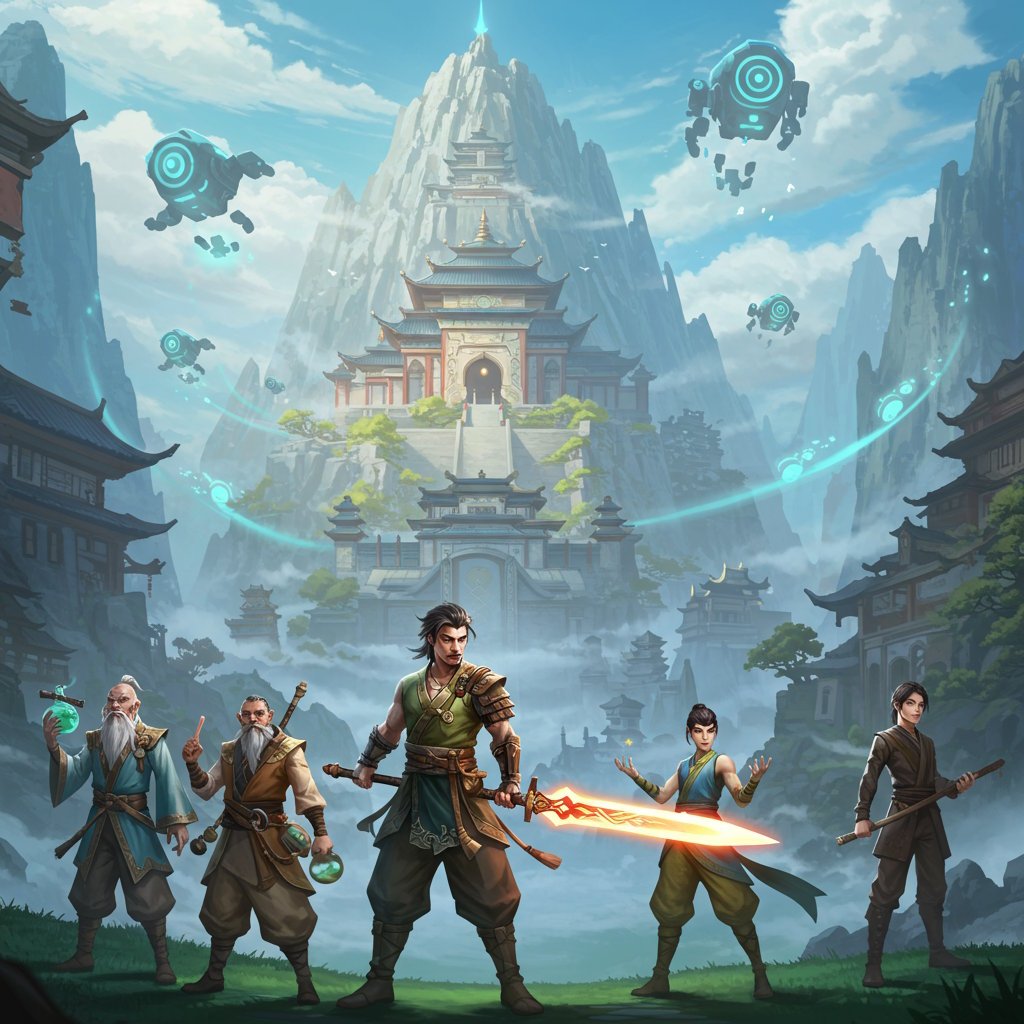 Heroes of Yuanjing gather before the mountain temple, watched over by mysterious devices. | 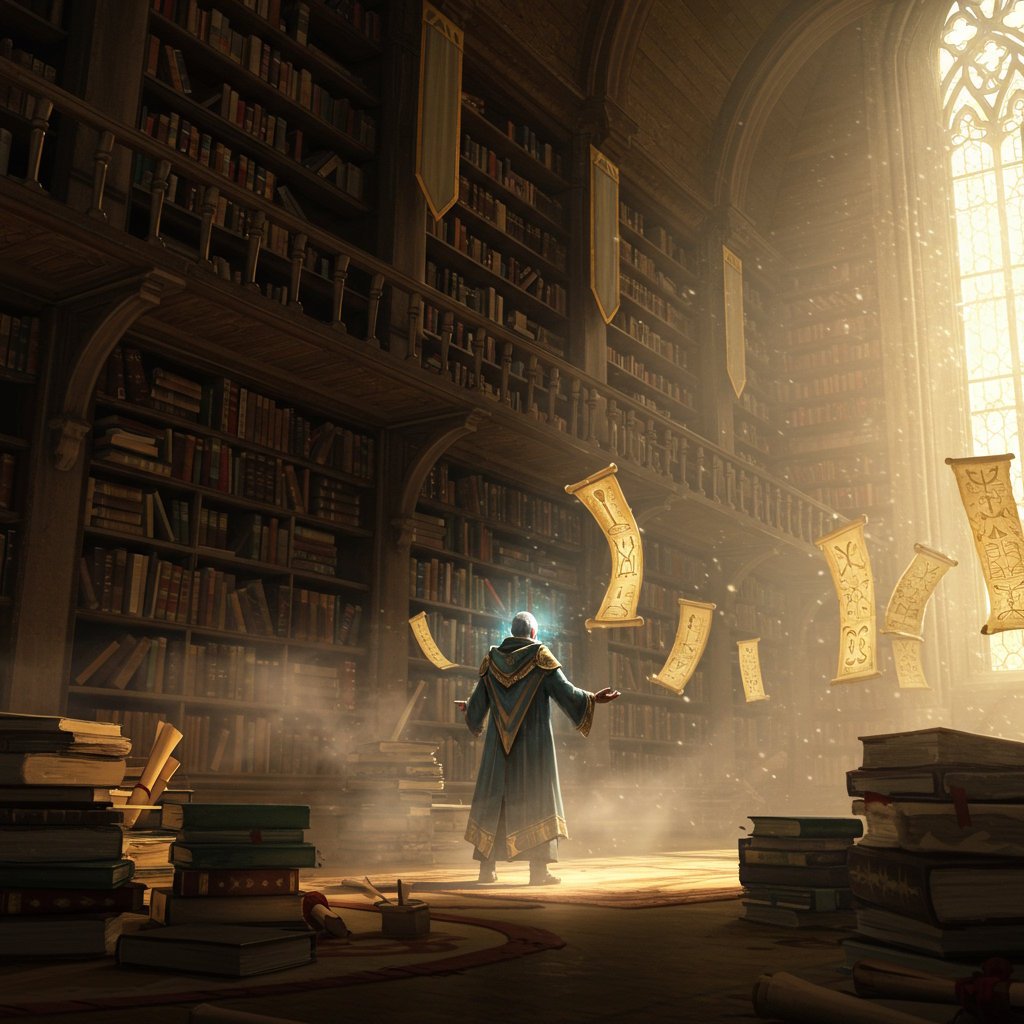 The wisdom of past ages flows through enchanted scrolls that awaken to seekers. | 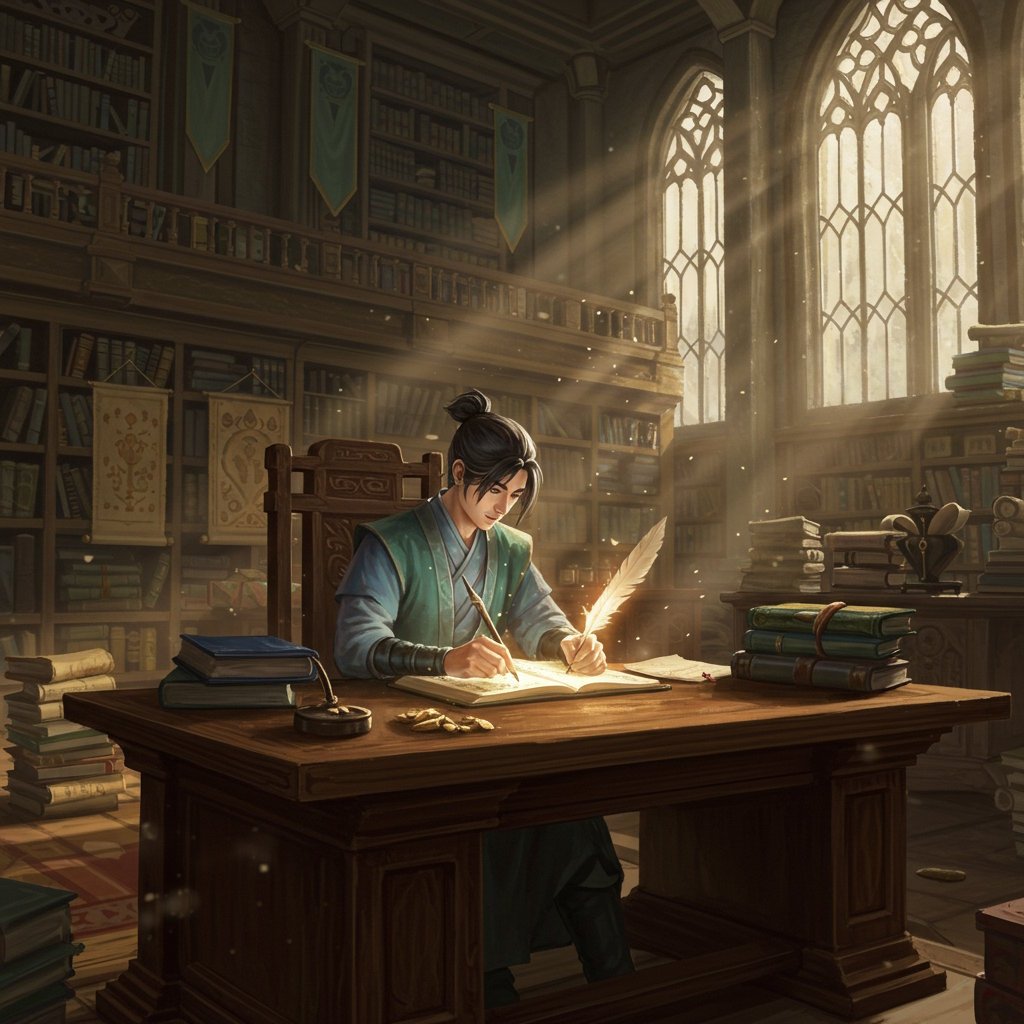 An apprentice records insights from his Awakening, the first step toward mastery. |
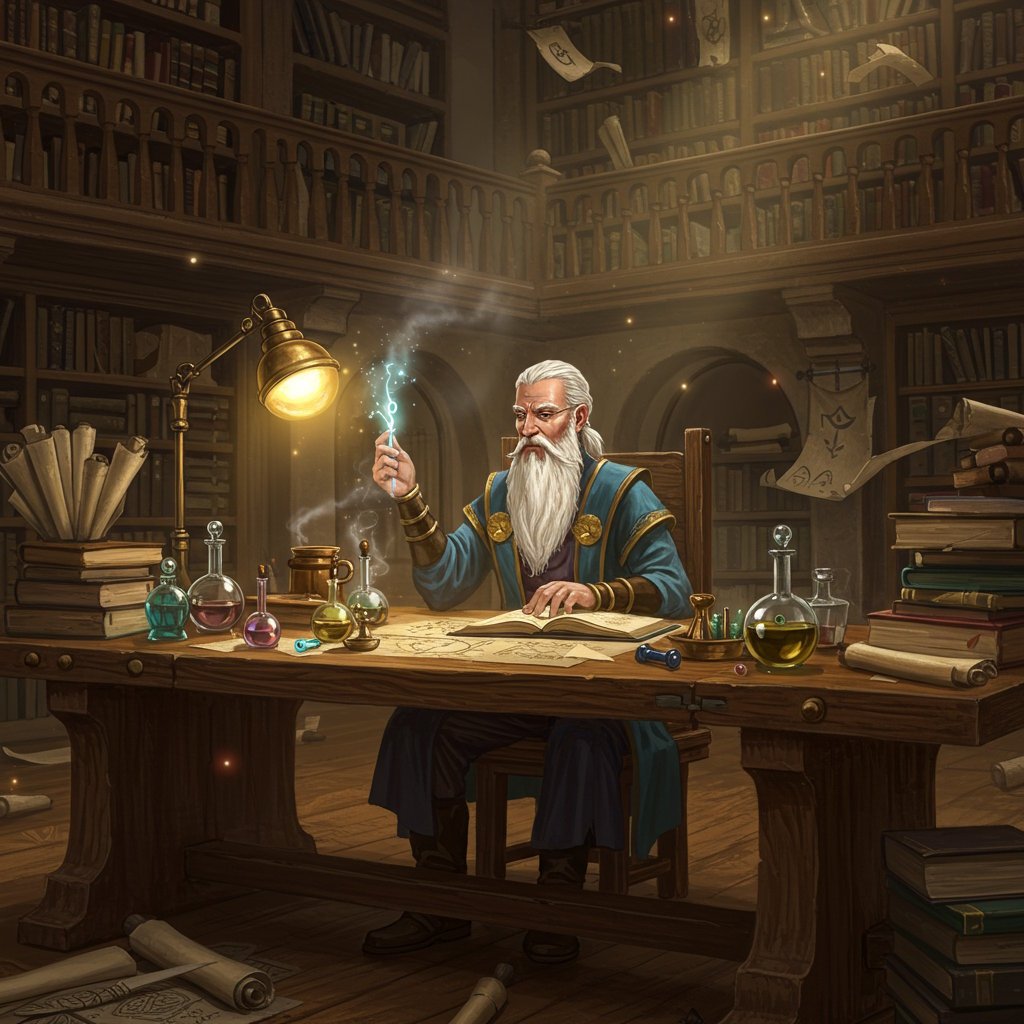 A guild master refines ancient knowledge into alchemy, guiding disciples of Yuanjing. | 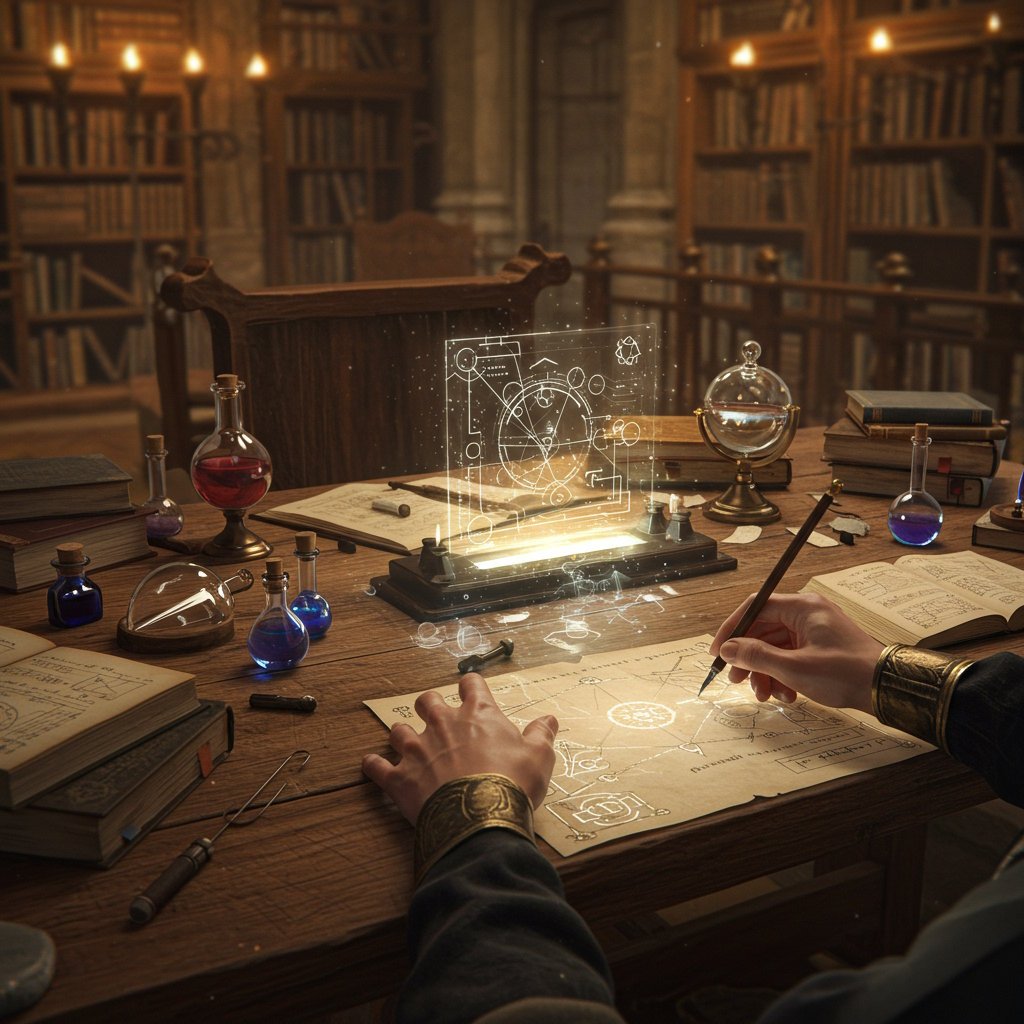 The living diagrams of qi reveal pathways of power to the dedicated cultivator. | 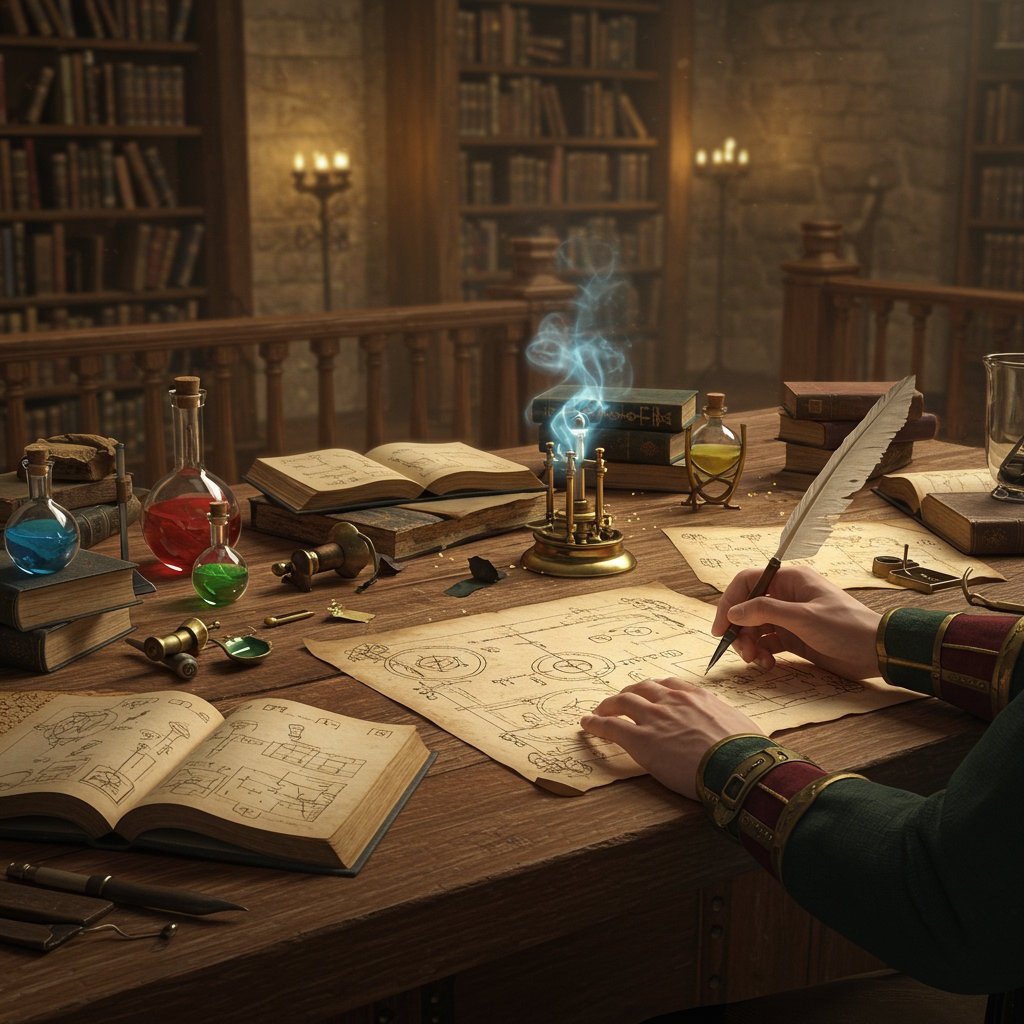 A cultivator records diagrams while compiling the Realm of Origin FAQ, charting qi and spiritual roots. |